
Ozempic Could Eat Up 7.3% of Household Income if Paying Out of Pocket

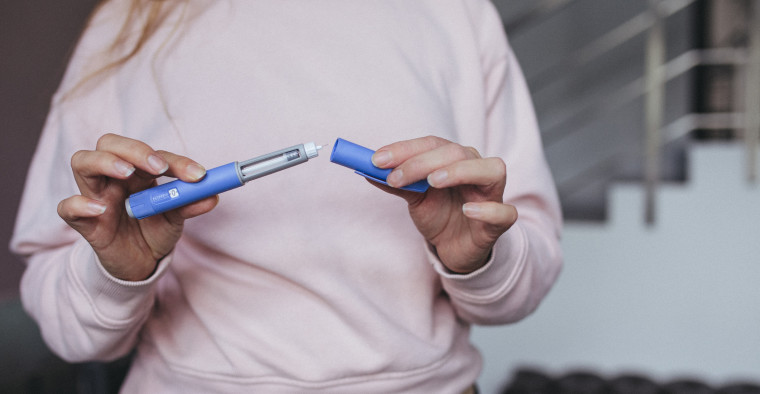
Ozempic slims more than your waist — if you’re paying out of pocket, your wallet’s likely thinner, too. Without health insurance, American households that make the median annual income would need to spend an average of 7.3% of their earnings to pay for 2 mg of Ozempic.
Here’s what else we found.
On this page
- Key findings
- Ozempic costs a chunk of average American households’ income
- Mississippi households would pay the highest share of income
- 58% of Americans are familiar with GLP-1 medications
- Current users pay $100 or more out of pocket
- More would consider using GLP-1s if covered by insurance
- Considering Ozempic or a similar drug? Top insurance tips
- Methodology
Key findings
- Based on an annual cost of $5,988 ($499 a month), the median American household would need to spend an average of 7.3% of their annual income to pay out of pocket for 2 mg of Ozempic. Even at the lower $349 monthly price for 0.25 mg, 0.5 mg or 1 mg, Ozempic would still take up 5.1% of household income.
- Ozempic could take up one-tenth of household income in the lowest-income states. Mississippi (10.1%) leads, followed by West Virginia and Louisiana (both at 9.8%). Conversely, households in higher-income states — the District of Columbia, Massachusetts and New Jersey — spend 5.7% or less.
- Ozempic and similar GLP-1 drugs are widely known, with 58% of Americans at least somewhat familiar with them. Nearly 4 in 10 adults (39%) are currently using, have used or are considering using these medications. Among those familiar, 51% believe only wealthy people can afford Ozempic or similar drugs for weight loss, while 21% disagree and 28% are neutral.
- Among current users, 60% pay $100 or more out of pocket each month for GLP-1 medications. 58% of users who pay out of pocket say they’ve delayed, skipped doses or stopped taking their medication because they couldn’t afford it.
- Insurance coverage could be a game changer. 55% of consumers who know about GLP-1s say they’d be likely to use Ozempic for weight loss if it were fully covered by insurance, including 2 in 3 millennials (67%).
Ozempic costs a chunk of average American households’ income
Perhaps unsurprisingly, the weight-loss jab is pricey. Based on a price of $499 for 2 mg, Americans making the median household income of $81,604 spend an average of 7.3% of their earnings paying out of pocket for the drug. That adds up to an annual cost of $5,988.
Smaller injection strengths are cheaper but would still eat up a significant portion of income. With a monthly price of $349 for 0.25 mg, 0.5 mg or 1 mg, Americans would still need to shell out 5.1% from their median household income.
ValuePenguin health insurance expert Talon Abernathy says those high costs are consequential for everyone.
"GLP-1 drugs have proven so popular (and so expensive!) that health insurance companies have specifically cited these drugs as a reason for the higher health insurance rates we’re experiencing in 2026," he says. "That means everyone will pay more for health insurance every month to cover the cost of these new weight-loss medications."
To paint an even more vivid picture, Americans spent an average of $1,514 out of pocket on medical care in 2023. That’s just 25.3% of Ozempic's annual self-pay cost of $5,988.
Despite the high costs, more Americans than ever are turning to GLP-1 medications. Medicare beneficiaries using Ozempic increased from close to 142,500 in 2019 to nearly 1.5 million in 2023 — a 928% jump. Mounjaro, which was approved for diabetes in May 2022 (and for weight loss under the name Zepbound in November 2023), reached 370,203 Medicare beneficiaries in 2023.
Americans are more interested in Ozempic for weight loss
Though it started as a diabetes drug, Americans more often think of Ozempic for weight-loss purposes. In fact, Ozempic is searched for weight loss five times more often than for diabetes.
Google Trends data from November 2024 to November 2025 shows that searches for "Ozempic for weight loss" averaged 69 on a scale of one to 100 (where 100 is the peak search volume), compared with just 14 for "Ozempic for diabetes."
By state, West Virginia shows the strongest search interest in Ozempic, which aligns with the state’s exceptionally high need: West Virginia has the highest diabetes rate in the country (15.0%), according to a ValuePenguin study on U.S. diabetes rates.
Mississippi households would pay the highest share of income
States with the lowest incomes pay the highest share of income for Ozempic. Looking by state, Mississippi takes the top spot, with Ozempic eating up 10.1% of the median household income. West Virginia and Louisiana (both at 9.8%) follow.
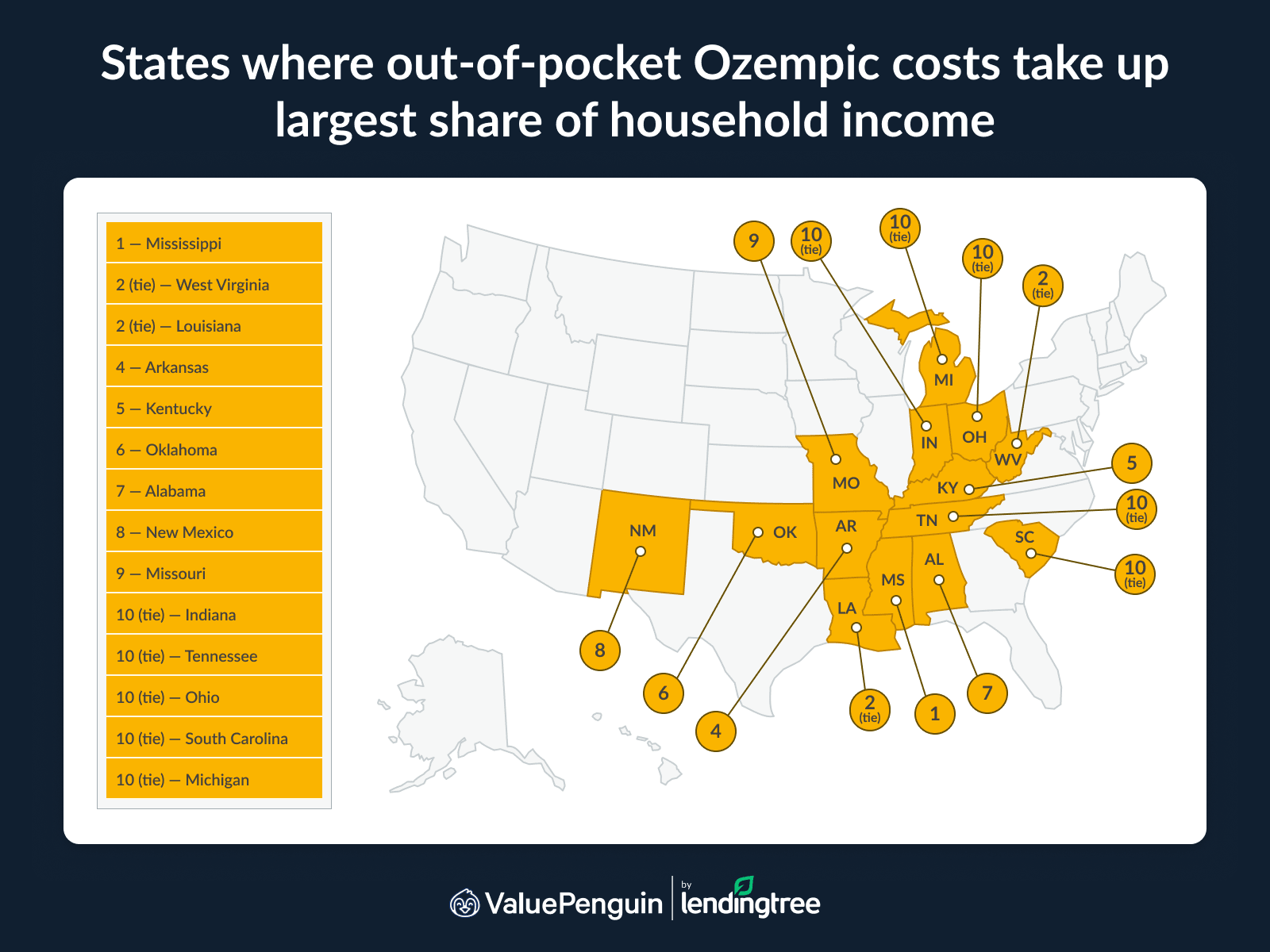
Conversely, households in higher-income states spend the least. The District of Columbia leads, at 5.5%. Massachusetts and New Jersey tie for second at 5.7%.
Full rankings: States where Ozempic is least affordable relative to income
Rank | State | Median household income | % of income spent on 2 mgs ($499/mo) | % of income spent on 0.25 mg, 0.5 mg or 1 mg ($349/mo) |
|---|---|---|---|---|
| 1 | Mississippi | $59,127 | 10.1% | 7.1% |
| 2 | West Virginia | $60,798 | 9.8% | 6.9% |
| 2 | Louisiana | $60,986 | 9.8% | 6.9% |
| 4 | Arkansas | $62,106 | 9.6% | 6.7% |
| 5 | Kentucky | $64,526 | 9.3% | 6.5% |
| 6 | Oklahoma | $66,148 | 9.1% | 6.3% |
| 7 | Alabama | $66,659 | 9.0% | 6.3% |
| 8 | New Mexico | $67,816 | 8.8% | 6.2% |
| 9 | Missouri | $71,589 | 8.4% | 5.9% |
| 10 | Indiana | $71,959 | 8.3% | 5.8% |
| 10 | Tennessee | $71,997 | 8.3% | 5.8% |
| 10 | Ohio | $72,212 | 8.3% | 5.8% |
| 10 | South Carolina | $72,350 | 8.3% | 5.8% |
| 10 | Michigan | $72,389 | 8.3% | 5.8% |
| 15 | North Carolina | $73,958 | 8.1% | 5.7% |
| 16 | Montana | $75,340 | 7.9% | 5.6% |
| 16 | Iowa | $75,501 | 7.9% | 5.5% |
| 16 | Kansas | $75,514 | 7.9% | 5.5% |
| 16 | Wyoming | $75,532 | 7.9% | 5.5% |
| 20 | Nebraska | $76,376 | 7.8% | 5.5% |
| 20 | Maine | $76,442 | 7.8% | 5.5% |
| 20 | South Dakota | $76,881 | 7.8% | 5.4% |
| 23 | Wisconsin | $77,488 | 7.7% | 5.4% |
| 23 | Pennsylvania | $77,545 | 7.7% | 5.4% |
| 23 | Florida | $77,735 | 7.7% | 5.4% |
| 23 | North Dakota | $77,871 | 7.7% | 5.4% |
| 27 | Texas | $79,721 | 7.5% | 5.3% |
| 27 | Georgia | $79,991 | 7.5% | 5.2% |
| 29 | Nevada | $81,134 | 7.4% | 5.2% |
| 29 | Idaho | $81,166 | 7.4% | 5.2% |
| 31 | Arizona | $81,486 | 7.3% | 5.1% |
| 32 | Vermont | $82,730 | 7.2% | 5.1% |
| 32 | Illinois | $83,211 | 7.2% | 5.0% |
| 32 | Rhode Island | $83,504 | 7.2% | 5.0% |
| 35 | Oregon | $85,220 | 7.0% | 4.9% |
| 35 | New York | $85,820 | 7.0% | 4.9% |
| 37 | Minnesota | $87,117 | 6.9% | 4.8% |
| 38 | Delaware | $87,534 | 6.8% | 4.8% |
| 39 | Virginia | $92,090 | 6.5% | 4.5% |
| 40 | Alaska | $95,665 | 6.3% | 4.4% |
| 41 | Connecticut | $96,049 | 6.2% | 4.4% |
| 41 | Utah | $96,658 | 6.2% | 4.3% |
| 41 | Colorado | $97,113 | 6.2% | 4.3% |
| 44 | Washington | $99,389 | 6.0% | 4.2% |
| 44 | New Hampshire | $99,782 | 6.0% | 4.2% |
| 44 | California | $100,149 | 6.0% | 4.2% |
| 47 | Hawaii | $100,745 | 5.9% | 4.2% |
| 48 | Maryland | $102,905 | 5.8% | 4.1% |
| 49 | New Jersey | $104,294 | 5.7% | 4.0% |
| 49 | Massachusetts | $104,828 | 5.7% | 4.0% |
| 51 | District of Columbia | $109,707 | 5.5% | 3.8% |
Source: ValuePenguin analysis of the U.S. Census Bureau 2024 American Community Survey with one-year estimates. Notes: Ozempic pricing information was obtained from Ozempic.com, accessed Nov. 21, 2025. Costs assume 12 monthly fills based on the manufacturer’s stated self-pay monthly price. Rankings are based on 2 mg-dose pens.
58% of Americans are familiar with GLP-1 medications
Nowadays, Ozempic is a household name. Across all Americans, 58% are familiar with Ozempic and similar GLP-1 drugs. A significant 4 in 10 adults (39%) are currently using, have used or are considering using these medications — and this figure rises to 50% among those familiar with GLP-1s. Those with children younger than 18 (26%), six-figure earners (26%), millennials (21%) and men (21%) are the most likely to currently use a GLP-1.

Given the costs, it may not be surprising that 51% of those familiar with GLP-1s believe only wealthy people can afford Ozempic or similar drugs for weight loss, while 21% disagree and 28% are neutral.
Current users pay $100 or more out of pocket
Among current users, 60% pay $100 or more out of pocket each month for GLP-1 medications.

As a result of those high prices, 58% of users who pay out of pocket say they’ve delayed, skipped doses or stopped taking their medication because they couldn’t afford it.
More would consider using GLP-1s if covered by insurance
Cost is the biggest hindrance for those interested in GLP-1s. In total, 55% of consumers who know about GLP-1s say they’d be likely to use Ozempic for weight loss if it were fully covered by insurance. That rises to 70% among parents with children younger than 18, with millennials (67%) close behind.

For those who qualify, 90% of health plans cover GLP-1 drugs for Type 2 diabetes, while just over 30% cover these drugs for obesity, according to a Pharmaceutical Strategies Group study.
Because of the growing popularity of GLP-1 drugs, Abernathy expects weight-loss coverage to expand in the future.
"We've already seen a strong reaction from insurance companies, especially when it comes to the health insurance you get through your employer," he says. "Companies know these drugs are popular and offering coverage for them can help attract and retain employees. At present, insurance companies are trying to thread the needle of offering access to these drugs while maintaining profitability."
Abernathy also believes the rise of generic GLP-1 drugs, along with efforts by the current administration to bring down drug prices across the board, will likely help lower prices of these weight-loss and diabetes drugs in the near future.
In November 2025, the Trump administration announced it had negotiated a significant price drop for Medicare and Medicaid enrollees. Starting in 2027, eligible members are expected to pay no more than $245 a month for popular GLP-1 drugs, such as Ozempic, Wegovy, Mounjaro and Zepbound.
Considering Ozempic or a similar drug? Top insurance tips
If you’re looking to lose some weight and you’re interested in Ozempic, there are a few insurance tips to keep in mind:
- Even if weight loss is your goal, many insurance companies cover GLP-1 drugs for reasons other than weight loss. "If you have or suspect you're at risk for Type-2 diabetes or a cardiovascular condition, ask your doctor if a GLP-1 drug may be part of an appropriate treatment regimen," Abernathy says. "Remember, weight loss alone is rarely sufficient reason for an insurance company to approve treatment."
- If your insurance doesn't cover your desired GLP-1 drug, consider going with a discount provider such as GoodRx. You'll typically pay a much lower out-of-pocket cost when you use a discount from one of these sources.
- Major drug manufacturers offer discounts to those who would otherwise struggle to pay for the drugs. "In some cases, this can lower your costs to $0 per month," Abernathy says. "Keep in mind, assistance is not guaranteed, and many of these programs have strict eligibility requirements."
Methodology
LendingTree researchers compared state and national median household incomes using the U.S. Census Bureau 2024 American Community Survey (ACS) with one-year estimates.
Ozempic pricing is based on Novo Nordisk’s publicly listed self-pay costs: $499 a month for an existing patient 2 mg-dose pen and $349 a month for lower-dose pens (0.25 mg, 0.5 mg or 1 mg). Pricing information was obtained from Ozempic.com (accessed Nov. 21, 2025).
Additionally, LendingTree commissioned QuestionPro to conduct an online survey of 2,015 U.S. consumers ages 18 to 79 from Nov. 5 to 10, 2025. The survey was administered using a nonprobability-based sample, and quotas were used to ensure the sample base represented the overall population. Researchers reviewed all responses for quality control.
We defined generations as the following ages in 2025:
- Generation Z: 18 to 28
- Millennial: 29 to 44
- Generation X: 45 to 60
- Baby boomer: 61 to 79
About the Author

Writer, Consumer Research
Maggie Davis is a staff writer at ValuePenguin. She primarily focuses on breaking down complex data and research about the financial lives of Americans into digestible content through our studies and surveys. Her reporting has been featured in numerous publications, such as Forbes and USA Today.
Education
- BA, Journalism, Pepperdine University
Editorial note: The content of this article is based on the author's opinions and recommendations alone. It has not been previewed, commissioned or otherwise endorsed by any of our network partners.
