What Is a Contingent Beneficiary?
A contingent beneficiary is the backup person who would receive your life insurance death benefit if all of your primary beneficiaries are... Read More


Compare life insurance quotes and find the best rates for a policy.
Life insurance can help protect your family financially if anything happens to you, but it’s important to make sure you’re not overpaying for the coverage you need.
Life insurance lets you leave a sum of money to someone you choose after you pass away.
Most people buy life insurance so that their dependents can pay for the funeral costs and any other end-of-life expenses. It's also common to buy a policy to help children pay for college or help a spouse pay off any outstanding bills.
Here's what makes up a life insurance policy:
The amount and type of life insurance you need depends on the kind of payout you want for your loved ones.

If you have a spouse who would need help paying the mortgage or children who would need money to go to college, you will likely want to get a policy with a larger payout.
But if you have no debt and your family wouldn't need much financial help, you could choose to get a policy just to leave a financial gift to your family, friends or a charity. Otherwise, you might decide to skip life insurance altogether.
To decide how much life insurance you need, start by adding up your current and future financial obligations. This can include expenses such as:
After you have figured out your financial situation, add up your current assets such as savings and college funds. Finally, subtract your current assets from the obligations. That gets you to a target amount for how much life insurance you might need.
Keep in mind that this is a rough estimate for coverage. It may be useful to purchase slightly more life insurance to compensate for unexpected financial situations that your dependents might face.
Life insurance companies will typically offer two different types of life insurance: term life insurance and permanent life insurance.
A term policy lasts for a set period of time before expiring, while permanent plans stay active for your entire life. Some permanent life insurance policies also have a cash value component that grows as you make premium payments.
Term life insurance | Permanent life insurance | |
|---|---|---|
| Period of coverage | Specified term, usually one to 30 years | Lifelong |
| Cash value | No | Yes |
| Average monthly premium | Cheap | Expensive |
Depending on your situation and what the purpose of your life insurance is, the type of life insurance that you need will change.
For example, if you are looking for a cheap policy to cover future financial obligations like college tuition, then choosing a term life insurance policy with a death benefit that matches the total tuition may be the best option. But if you have Type 1 diabetes and have had problems with getting approved for life insurance, a permanent policy like guaranteed acceptance life insurance could be the best option for coverage.
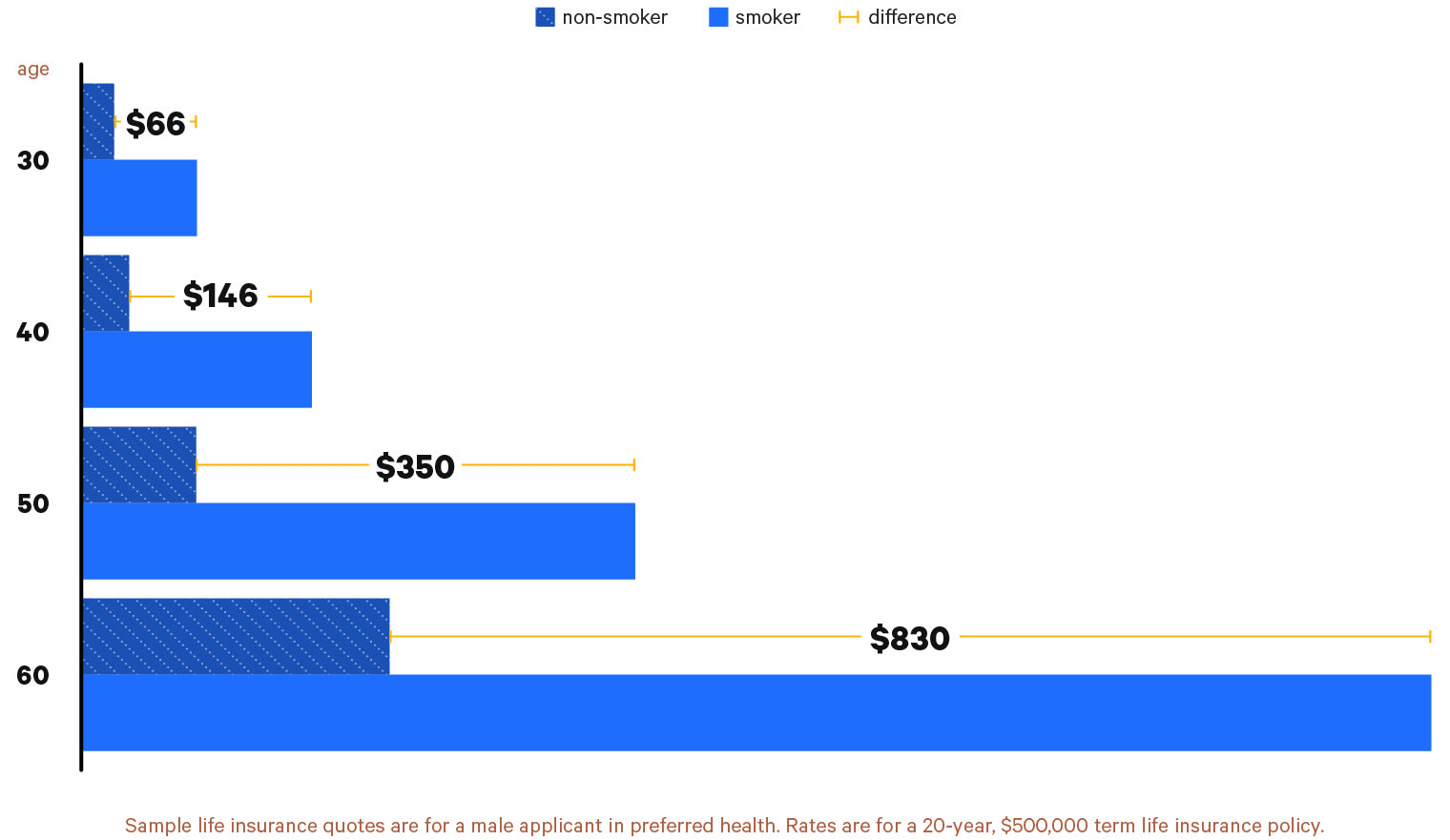
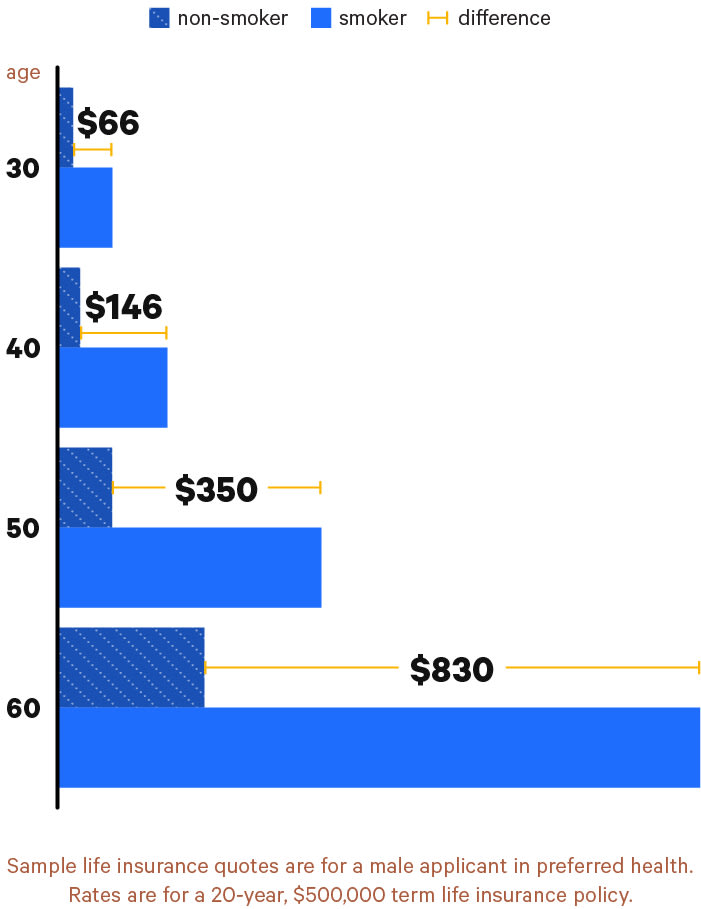
The cost of your life insurance policy depends on a variety of factors including your health, age and occupation. However, the biggest factor is whether or not you smoke.
The average cost of life insurance for smokers is 306% higher than the cost of policies for nonsmokers.
A contingent beneficiary is the backup person who would receive your life insurance death benefit if all of your primary beneficiaries are... Read More
It's simple to borrow against the cash value of a permanent life insurance policy, as there are no loan requirements or qualifications... Read More
Variable life insurance, also called variable appreciable life insurance, provides lifelong coverage, as well as a cash value account. See... Read More
There are several ways to purchase life insurance for your family, including whole life insurance for your children, a joint life insurance... Read More
In most cases, life insurance death benefits are not taxed. But you may owe taxes if the estate is very large or you sell your own policy... Read More
Group and supplemental life insurance from your employer can provide coverage at discounted rates. But should you buy individual term life... Read More
Life insurance can be incredibly important for seniors who want to provide financial coverage for their families. Foresters is the best... Read More
Your life insurance policy should include enough to cover the money your family relies on you for, plus your end-of-life expenses, if... Read More
Universal life insurance offers permanent coverage similar to whole life insurance, but it has better rates and the opportunity to pay... Read More
When you die, some debts are forgiven, but most are collected from your estate. If your loans are larger than the value of your estate,... Read More
No medical exam life insurance, also called simplified issue, lets you get coverage without a physical, blood test or urine test. While... Read More
When you purchase a life insurance policy, you’ll be given the option of designating one or multiple beneficiaries to receive a death... Read More

Former Lead Writer
Matt Timmons is a former Lead Writer on the insurance team at ValuePenguin, where he writes in-depth and timely pieces helping find the right coverage for them.
He covered insurance at ValuePenguin between 2018 and 2026, specializing in auto and home insurance, as well as life insurance. He paid special attention to the EV insurance market, where prices are much higher than for gas cars.
Before he started writing about personal finance, Matt wrote about professional skills and online tools at an e-learning company.
How insurance helped Matt
During freshman orientation in college, Matt's iPod was stolen off his table while he was eating lunch. Luckily, he'd bought a college insurance plan the day before and he had money to buy a replacement before classes started.
Expertise
Referenced by
Education
